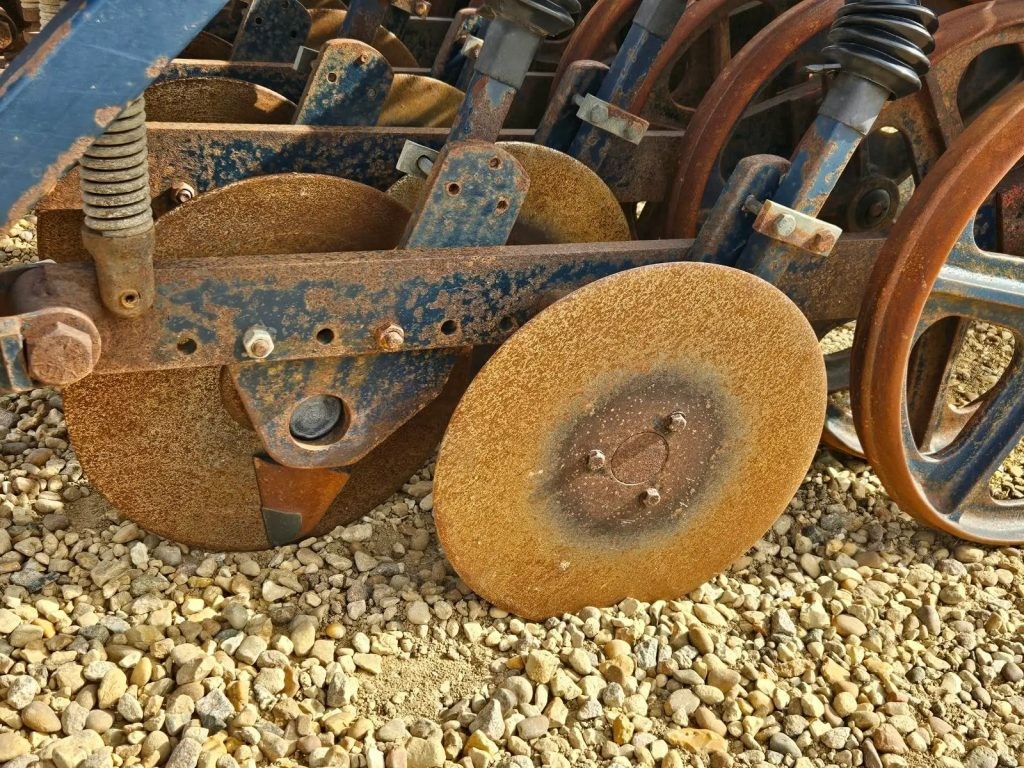
Wearing metal is designed to wear. On a direct drill, parts such as discs, coulters, scrapers and other soil-engaging components are there to take abrasion, impact and soil contact so the machine can continue working as intended.
The problem comes when wearing metal is left on the machine beyond its effective working life. At that point, it is no longer just a worn part. It can begin to change how the drill performs, how much force is required to maintain depth, and how much stress is transferred into more expensive components such as hubs, bearings and fixings.
That is why replacing wearing metal at the correct time is not simply about maintenance. It is about protecting drilling performance, crop establishment and long-term machine reliability.
A direct drill relies on the correct relationship between the disc, coulter, hub, bearing and packer. These components are designed to work together. The disc cuts and opens the slot. The coulter places the seed. The packer helps close the slot and maintain seed-to-soil contact.
As the disc wears, that relationship changes.
On a Moore Unidrill, the original disc diameter is approximately 415 mm. As a guide, discs should be replaced once they have worn by around 15% from their original diameter. This means replacement should be considered when discs are approaching approximately 355 mm.
At this level of wear, the issue is not simply that the disc is smaller. A worn disc can reduce cutting performance, make penetration more difficult, alter the relationship between the disc and seed tube coulter, and increase the amount of force needed to maintain working depth.
In simple terms: the more worn the wearing metal becomes, the harder the rest of the drill may have to work.
A common argument is that plenty of drills are running on worn discs without obvious hub or bearing problems. That may be true, but it misses an important point: not every machine is working in the same conditions. A drill operating on worn discs in kind, moist, forgiving soil is not under the same load as a drill working in hard, dry, compacted or stony ground.
In easier conditions, worn discs may continue working without an immediate visible issue. In harsher conditions, the same level of wear can create a very different outcome. The drill may struggle to cut, need more pressure to penetrate, vibrate more heavily, or transmit more shock loading through the disc, hub and bearing assembly.
Forward speed, soil moisture, stone content, ballast, depth setting and operator set-up all affect the amount of load going through the machine.
That is why wear should not be judged only by whether something has failed yet. The better question is: Is the drill still operating within its intended wear limits? If the answer is no, the risk of extra stress and avoidable damage is already increasing.
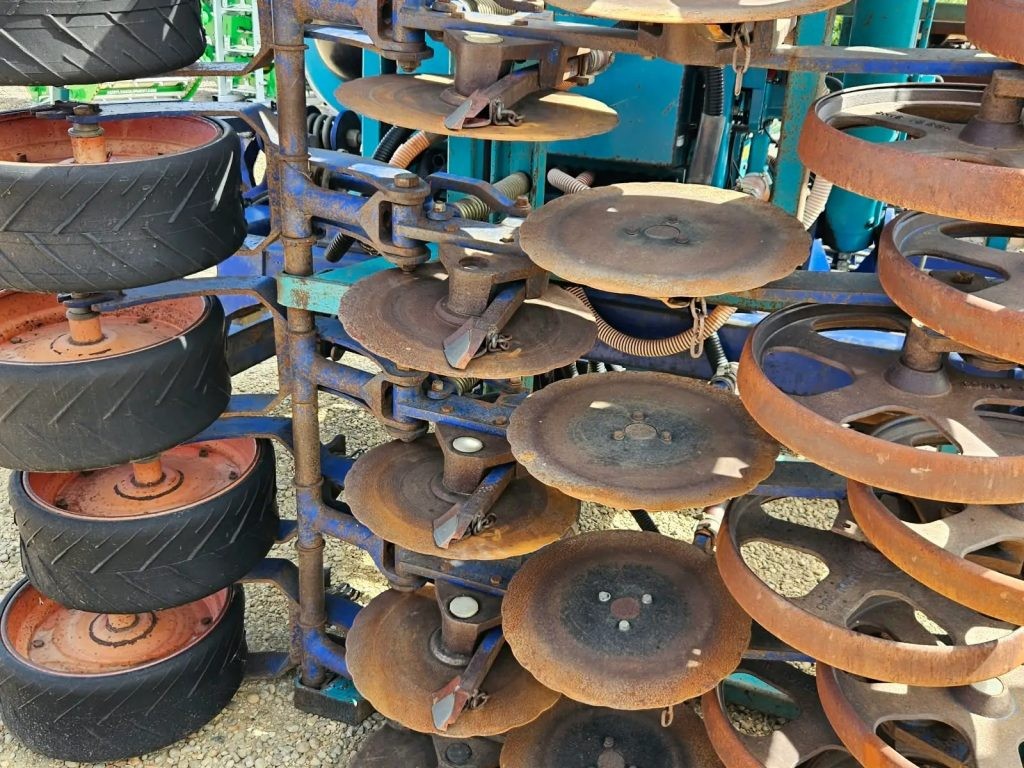
Wearing metal is usually cheaper to replace than the components it protects. A worn disc or coulter might appear to have a little more life left in it, but if it reduces cutting performance, increases vibration, affects seed placement or places extra load on the hub and bearing assembly, the eventual cost can be far higher.
Running worn wearing metal for too long can contribute to:
The part designed to wear is often protecting the parts that were not designed to take unnecessary extra stress.
The impact of worn wearing metal becomes much greater in difficult conditions. Hard, dry ground increases the force required for a disc to cut and penetrate. Stony ground adds repeated impact loading. Higher forward speeds increase the severity of those impacts. Extra ballast or aggressive depth settings may help penetration in the short term, but they can also increase the load going through the disc, hub and bearing assembly. This does not mean the machine is weak. It means the machine is being asked to work harder, and worn wearing metal makes that harder still.
A sharp, serviceable disc has a much better chance of cutting cleanly, maintaining depth and reducing unnecessary load. A badly worn disc in the same field may force the operator to compensate with more pressure, slower work rates or repeated adjustment. That is not efficient machine management.
Keeping wearing metal in good condition is not just about avoiding mechanical issues. It also protects drilling accuracy.
Fresh, correctly adjusted wearing parts help the drill:
This is especially important in direct drilling, where seed placement and seed-to-soil contact are critical. If the disc is badly worn or the coulter is incorrectly adjusted, it can affect establishment as well as machine life. Wearing metal is not just a parts issue. It is a drilling performance issue.
Operators should check wearing parts regularly, particularly in abrasive, dry, hard or stony conditions.
Key checks should include:
If abnormal noise, heat, vibration, looseness or visible damage is found, the machine should be stopped and inspected before continuing. Continuing to operate a machine with a known fault can turn a small issue into a much larger repair.
There is a mindset that wearing metal should be used until it is completely finished. That is understandable, but it is not always commercially sensible. The best time to replace a wearing part is not when it has disappeared completely. It is when it has stopped allowing the machine to work correctly. If a disc is worn to the point where it reduces cutting performance, affects geometry, increases load or compromises seed placement, then it has reached the end of its effective working life, even if there is still metal left on it.
Replacing wearing metal at the correct time helps protect:
It is planned maintenance rather than reactive repair.
A direct drill is a system. When the wearing parts are in good condition, the machine can work as designed. When those parts are badly worn, the system becomes compromised. The drill may still move through the field, but it may be doing so with poorer cutting performance, poorer seed placement and greater mechanical stress. Keeping wearing metal fresh is not about replacing parts for the sake of it. It is about protecting the machine, protecting the crop and avoiding the higher cost of preventable damage.
The cheapest repair is often the one you never have to make.
When should Moore Unidrill discs be replaced?
Moore Unidrill discs start at approximately 415 mm diameter. As a guide, replacement should be considered once discs have worn by around 15%, or when they are approaching approximately 355 mm diameter.
Can worn drill discs cause bearing problems?
Worn discs can increase vibration, reduce cutting performance and place additional stress on the hub and bearing assembly, especially in hard, dry or stony conditions. Bearing issues are not always caused by worn discs, but excessive disc wear can be a contributing factor.
Why do worn discs cause more stress in hard or stony ground?
Hard ground increases the force required for penetration, while stony ground adds repeated impact loading. If the discs are worn, the drill may need more pressure to maintain depth, which can increase stress through the disc, hub and bearing assembly.
Are wearing parts covered by warranty?
Wearing parts are service items and are not normally covered by warranty unless a proven manufacturing defect is identified. Normal wear, abrasion and impact damage are part of regular machine use.